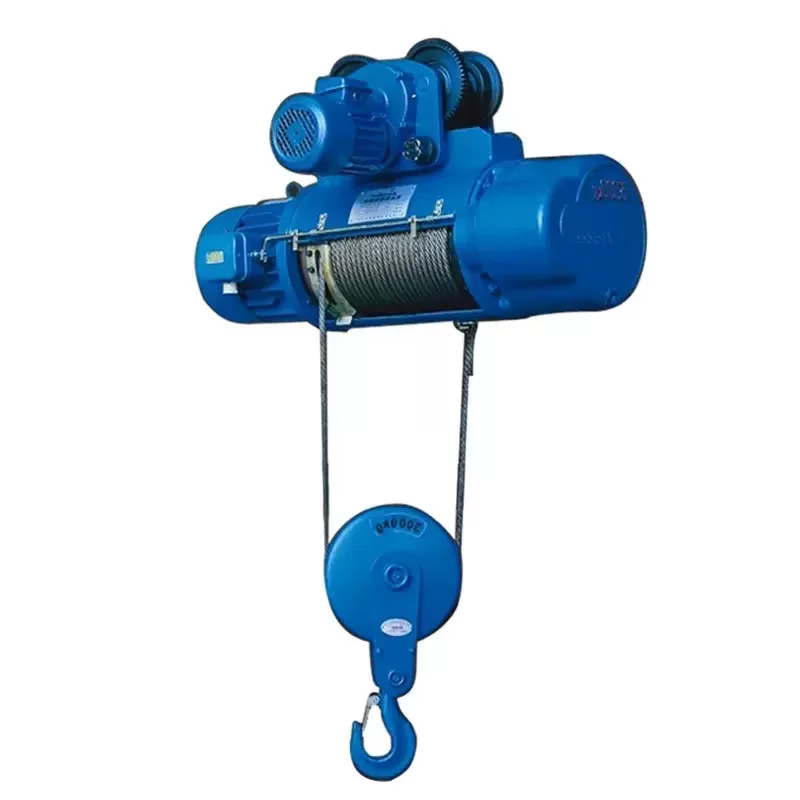
The modern industrial landscape demands efficiency and reliability in material handling, and the 220v winch has emerged as a pivotal tool for bridging the gap between heavy-duty industrial capacity and the accessibility of standard power grids. Whether in a small workshop or a medium-sized construction site, the ability to lift and pull substantial loads without requiring specialized three-phase electrical installations significantly lowers the barrier to operational productivity.
Across global markets, the shift toward versatile, plug-and-play lifting equipment reflects a broader trend in the manufacturing sector toward decentralization and flexibility. By utilizing a standard single-phase power supply, these machines allow for rapid deployment in diverse environments, reducing the need for expensive electrical infrastructure upgrades while maintaining high safety standards and operational stability.
Understanding the technical nuances and application limits of a 220v winch is essential for ensuring workplace safety and maximizing equipment lifespan. By integrating high-quality motor technology with rigorous testing standards, manufacturers can provide solutions that empower businesses to scale their lifting capabilities without compromising on reliability or safety.
Global Relevance of 220v Winch Systems
In the global movement toward industrial optimization, the 220v winch serves as a critical asset for SMEs (Small and Medium Enterprises) across Europe, America, and Southeast Asia. By aligning with the standard voltage common in most residential and light commercial zones, these devices eliminate the logistical nightmare of sourcing industrial 380V power in remote or temporary sites, thereby increasing the agility of project execution in sectors like road construction and petrochemical logistics.
The demand is further driven by ISO safety standards and the need for CE-certified machinery that can be deployed quickly. As global trade expands, the ability to import a standardized lifting solution that works instantly upon plugging into a local grid ensures that infrastructure projects can remain on schedule regardless of the local electrical complexities.
Defining the 220v Winch in Modern Industry
At its core, a 220v winch is an electromechanical device designed to pull or lift heavy loads using a motorized drum powered by a single-phase alternating current. Unlike manual hoists that rely on human strength or complex industrial hoists that require specialized power panels, this equipment provides a balanced synergy of power and portability, making it an indispensable tool for tasks ranging from garage installations to light industrial warehouse management.
Within the context of modern manufacturing, these devices are categorized as light-to-medium lifting equipment. They bridge the gap between handheld tools and heavy crane systems, allowing operators to move materials with precision and minimal effort. This transition to electric automation reduces physical strain on workers and significantly decreases the time required for repetitive lifting cycles.
Furthermore, the integration of these winches into humanitarian and disaster relief efforts highlights their versatility. In areas where power infrastructure is damaged but basic generators are available, a 220v power source is often the first to be restored, allowing these winches to be used for clearing debris or lifting emergency supplies into makeshift shelters.
Core Components for Operational Reliability
The durability of a 220v winch is fundamentally tied to the quality of its motor and gearbox. High-grade copper winding in the motor ensures that the machine can handle sustained loads without overheating, while a precision-engineered gear system converts high-speed motor rotation into the high-torque force necessary for lifting capacities that can reach up to 1200kg in professional models.
Safety is anchored in the braking mechanism and the quality of the wire rope. A reliable 220v winch must feature an automatic electromagnetic or mechanical brake that engages instantly upon power loss, preventing the load from slipping. This is complemented by high-tensile steel cables that are tested for fatigue resistance, ensuring the equipment remains stable under peak tension.
Finally, the control interface—typically a pendant remote—allows the operator to maintain a safe distance from the load. By combining an intuitive control system with a robust chassis, the 220v winch becomes more than just a tool; it becomes a safety-certified system that minimizes operational risk and enhances the overall workflow efficiency of the worksite.
Performance Metrics and Efficiency Analysis
Evaluating the efficiency of a 220v winch requires a look at the relationship between lifting speed and capacity. For instance, typical professional models offer dual speeds (such as 10m/min and 5m/min), allowing operators to move loads quickly during the initial lift and then switch to a slower, more controlled speed for precise positioning. This versatility is key to preventing load swing and ensuring architectural accuracy in installation tasks.
When comparing different models, the capacity ranges from 100kg up to 1200kg, meaning that the power draw must be managed effectively to avoid tripping circuit breakers in standard 220v environments. Advanced motor designs now incorporate better thermal protection, allowing for higher duty cycles without the risk of permanent motor failure.
Global Applications and Practical Use Cases
In the petrochemical and shipping industries, the 220v winch is often used as a secondary lifting tool for maintaining valves, piping, and small components in areas where heavy cranes cannot reach. Its compact size allows it to be mounted on temporary gantries or mobile frames, providing the necessary leverage to lift components weighing several hundred kilograms without the need for a permanent power installation.
Additionally, in the construction of bridges and roads, these devices are used for the precise placement of reinforcement steel and the lifting of small molds. In remote industrial zones of Southeast Asia, the ability to run these machines on portable generators makes them the primary choice for quick-setup work sites, ensuring that productivity is not hindered by the lack of a centralized power grid.
Long-Term Value and Safety Advantages
The long-term value of investing in a professional-grade 220v winch lies in the reduction of operational downtime. Equipment that undergoes strict three-stage testing—including performance, safety, and stability checks—demonstrates a significantly lower failure rate. For a business, this means fewer unplanned stops and a lower total cost of ownership over the machine's lifecycle.
From a safety perspective, the move from manual to electric lifting eliminates the risk of human error associated with fatigue. The precision of an electric motor ensures a smooth, steady lift, which is crucial when handling fragile or high-value materials. This reliability fosters a culture of trust and safety within the workplace, as operators can rely on the machine to hold loads securely.
Furthermore, the use of CE and GS certified machinery ensures that the equipment meets rigorous international safety benchmarks. This not only protects the workers on the ground but also protects the company from liability, providing a logical and emotional sense of security that only high-standard engineering can provide.
Future Trends in Electric Lifting Technology
The future of the 220v winch is trending toward greater integration with digital monitoring systems. We are seeing the emergence of "smart winches" that can track the number of lift cycles, monitor the tension on the wire rope in real-time, and alert operators when maintenance is due. This shift toward predictive maintenance will further reduce failure rates and extend the service life of the equipment.
Sustainability is another key driver, with manufacturers exploring more energy-efficient motors that reduce power consumption during idle periods. The integration of regenerative braking systems—which can feed a small amount of energy back into the system during lowering—is also becoming a point of research to align lifting machinery with global green energy goals.
As automation continues to permeate the manufacturing sector, the 220v winch will likely see more integration with PLC (Programmable Logic Controller) systems. This will allow for synchronized lifting operations where multiple winches work in tandem to move massive loads with millimeter precision, all while running on a standard single-phase power supply.
Technical Specification Analysis of 220v Winch Models
FAQS
While professional 220v winches are designed for reliability, they are typically intended for intermittent use. For continuous heavy-duty industrial cycles, it is important to check the duty cycle rating of the specific model to prevent motor overheating. Using models with better thermal protection, like those from Hebei Juying, helps mitigate this risk.
The primary difference is the power requirement. A 220v winch runs on single-phase power, making it ideal for workshops and residential areas. A 380v hoist requires three-phase industrial power, which generally allows for higher capacities and heavier duty cycles but requires more expensive electrical installation.
Safety is ensured by verifying the load does not exceed the rated capacity (e.g., 1200kg for the Pa1200 model). Always inspect the wire rope for frays, ensure the automatic brake is functioning, and use a certified pendant control to maintain a safe distance from the load during operation.
Most standard electric winches are designed for indoor or sheltered environments. For outdoor use, you should ensure the unit has an appropriate IP rating for dust and water resistance, or use protective covers to prevent moisture from entering the motor and electrical components.
Wire rope replacement depends on usage frequency and load weight. It is recommended to perform a visual inspection weekly. If you notice any broken strands, significant wear, or kinking, the rope should be replaced immediately regardless of its age to prevent catastrophic failure.
A 220V AC motor cannot be run directly off a DC battery. To do this, you would need a power inverter capable of handling the high starting current (surge) of the winch motor. However, for battery-powered needs, we recommend purchasing a dedicated DC winch to ensure efficiency and safety.
Conclusion
In summary, the 220v winch represents a critical intersection of convenience and power, providing an accessible lifting solution for a wide array of global industries. By leveraging standard power grids and incorporating rigorous safety certifications and dual-speed controls, these machines empower users to handle loads up to 1200kg with confidence and precision, significantly reducing the physical burden on workers and the infrastructure costs for businesses.
As the industry moves toward smarter, more sustainable lifting technologies, the role of the electric winch will only grow. Investing in high-quality, tested equipment is not just a purchase in hardware, but an investment in workplace safety and operational longevity. For those seeking reliable, CE-certified lifting solutions to optimize their workflow, we invite you to explore our full range of products. Visit our website: www.juyinghoist.com