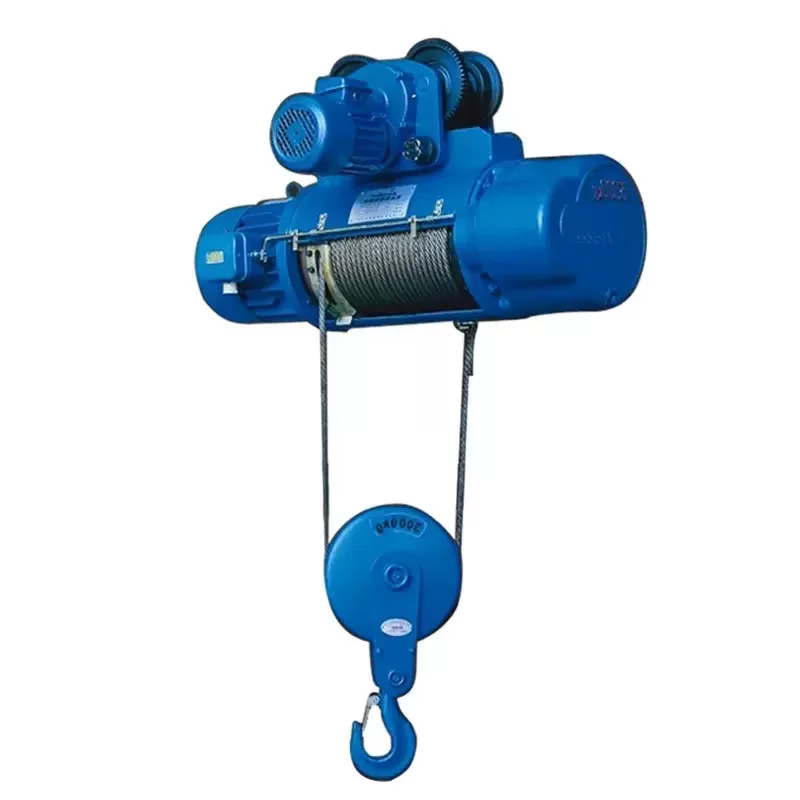
In the modern industrial landscape, the efficient movement of heavy materials is not just a matter of convenience but a cornerstone of operational safety and productivity. The CD1 electric hoist represents a pivotal solution for businesses seeking a balance between high lifting capacity and streamlined operation, reducing the physical strain on workers while accelerating project timelines.
Across the globe, from petrochemical plants to bridge construction sites, the demand for reliable lifting equipment has surged as infrastructure projects become more complex. The ability to hoist heavy loads with precision and stability is critical in preventing workplace accidents and ensuring that high-value components are positioned correctly without damage.
By integrating advanced motor technology and durable wire rope systems, the CD1 electric hoist provides an essential mechanical advantage for diverse industrial applications. Understanding the technical specifications and operational advantages of this equipment is key to optimizing warehouse logistics and construction efficiency.
The Technical Foundation of CD1 Electric Hoist
The CD1 electric hoist is engineered as a specialized wire rope lifting device designed for high efficiency and low maintenance. Its core architecture focuses on a robust motor drive and a precision-wound drum, allowing it to handle varying capacities from 2000lb up to 12000lb. This technical versatility makes it an ideal choice for facilities that require flexible lifting solutions without the need for massive overhead crane installations.
From a manufacturing perspective, the emphasis is placed on the synergy between the voltage input—supporting both DC 12V and 24V options—and the rope diameter. By matching rope thickness (ranging from 4mm to 9mm) with the specific lashing capacity, the hoist ensures a high safety factor and prevents premature wear under heavy stress.
Global Industrial Relevance and Demand
In the current era of rapid urbanization, the global lifting machinery market has seen a significant shift toward compact, high-capacity equipment. International standards such as CE and GS certifications have become the benchmark for safety, ensuring that equipment used in Europe and America meets rigorous operational criteria. The CD1 electric hoist fits perfectly into this demand by offering a certified, reliable means of transporting materials in tight industrial spaces.
Many emerging economies in Southeast Asia are investing heavily in road and bridge construction, as well as port expansion. These projects require equipment that can be deployed quickly and operated with minimal training. The simplicity of the wire rope hoist design allows it to be integrated into temporary structures or permanent workshops, bridging the gap between manual labor and fully automated systems.
The challenge most industries face is the "safety-efficiency paradox," where increasing speed often leads to higher risks. However, by utilizing professional-grade machinery with integrated motor testing and strict quality control, companies can achieve high throughput without compromising the safety of their personnel or the integrity of their cargo.
Core Components Ensuring Operational Safety
The operational integrity of a CD1 electric hoist relies on several critical components working in harmony. The motor serves as the heart of the system, and when subjected to a three-stage testing process, it ensures that the hoist can maintain stability even under peak load conditions. This rigorous testing lowers failure rates significantly compared to non-certified alternatives.
One of the most vital aspects of the CD1 electric hoist is the wire rope quality. Depending on the model, diameters vary from 4mm for light loads to 9mm for heavy-duty 12000lb capacities. The use of high-tensile steel ensures that the rope resists stretching and fraying, which is essential for maintaining precise load positioning in petrochemical and shipbuilding environments.
Furthermore, the electrical control system is designed for intuitive operation, allowing users to manage the lifting and lowering process with ease. By supporting both 12V and 24V DC power, the CD1 electric hoist can be adapted to different power sources, making it suitable for both stationary workshop use and mobile vehicle-mounted applications.
Performance Metrics and Capacity Analysis
When analyzing the performance of lifting equipment, the ratio of rope length to lashing capacity is a key metric. For instance, a model capable of 2000lb typically utilizes a 6m rope, whereas the heavy-duty 12000lb model extends to 24m. This scaling ensures that the hoist remains balanced and the motor is not overstressed during the full extension of the lift.
To further understand how different configurations perform, we evaluate these units based on operational stability, load precision, and durability. The following data illustrates the comparative performance of various configurations based on typical industry use cases.
Operational Performance of CD1 Electric Hoist Configurations
Versatile Applications in Modern Infrastructure
The utility of the CD1 electric hoist extends far beyond simple warehouse lifting. In the petrochemical industry, these hoists are used to move heavy valves and piping components in confined spaces where larger cranes cannot reach. Their compact footprint and high capacity make them indispensable for maintenance crews working on offshore platforms or within refinery towers.
Similarly, in the realm of road and bridge construction, these units are often integrated into mobile workshops. Because they support DC voltage, they can be powered by vehicle batteries, providing a portable lifting solution for installing guardrails or lifting heavy structural bolts in remote areas where grid power is unavailable.
Long-term Value and Maintenance Benefits
Investing in a high-quality hoist is not just about the initial purchase but about the total cost of ownership. The CD1 electric hoist is designed with a focus on "innovation as the driving force, quality as the foundation," which translates to fewer replacements and lower maintenance intervals. By using high-grade materials for the gears and drum, the equipment resists wear even under continuous daily operation.
One of the most significant long-term values is the availability of OEM/ODM services. This allows global clients to customize the branding and technical specifications to match their specific market needs. Customization ensures that the equipment is optimized for the local environment, whether that means extra corrosion resistance for coastal areas or specific voltage adjustments for regional power grids.
Moreover, the reliability of the three-stage motor testing means that the operational downtime is minimized. In a fast-paced industrial setting, a single hour of equipment failure can lead to thousands of dollars in lost productivity. The durability of the CD1 series provides peace of mind, knowing that the equipment will perform consistently throughout its service life.
Selection Guide for Different Load Requirements
Choosing the right model of CD1 electric hoist requires a careful analysis of the maximum load and the required lift height. For lighter tasks, such as moving toolboxes or small engine parts, a 2000lb or 3000lb model is sufficient and offers a smaller footprint. However, for industrial-grade lifting of heavy machinery, the 9500lb or 12000lb models are necessary.
Beyond capacity, the rope length is a critical decision factor. While a 6m rope is adequate for most indoor workshop ceilings, projects involving multi-story lifting or deep shaft work require the 24m options available in the higher-capacity models. Matching the rope diameter (from 4mm to 9mm) to the load is non-negotiable for safety.
Finally, consider the power source available at your site. The flexibility of DC 12V or 24V options allows these hoists to be integrated into existing electrical systems without expensive upgrades. Below is a detailed breakdown of the model specifications to assist in the selection process.
CD1 Electric Hoist Model Specification and Capacity Guide
| Model Capacity | Rope Length | Rope Diameter | Voltage Option |
|---|
| 2000lb | 6m | 4mm | DC 12V/24V |
| 3000lb | 6m | 5mm | DC 12V/24V |
| 4500lb | 10m | 7mm | DC 12V/24V |
| 6000lb | 14m | 9mm | DC 12V/24V |
| 9500lb | 24m | 9mm | DC 12V/24V |
| 12000lb | 24m | 9mm | DC 12V/24V |
FAQS
The voltage option determines the power source required to operate the hoist. 12V models are typically used with standard automotive batteries or small DC power supplies, making them ideal for light vehicles or portable setups. 24V models are designed for heavy-duty trucks, industrial machinery, or specialized power grids common in larger construction sites. Both options provide the same lifting capacity, but the voltage must match your available power source to avoid damaging the motor.
Rope diameter is strictly tied to the lashing capacity to ensure safety. For loads up to 2000lb, a 4mm rope is used. As the capacity increases to 3000lb-4000lb, it moves to 5mm. Heavy-duty loads (6000lb to 12000lb) require 9mm ropes. We strongly advise against using a thinner rope for a higher load capacity, as this drastically increases the risk of rope failure and workplace accidents. Always refer to the manufacturer's parameter table.
Yes, these hoists are designed for various fields including road and bridge construction. However, for long-term outdoor use, it is recommended to protect the motor and electrical components from extreme weather. The high-tensile wire rope is durable, but regular lubrication and inspection for corrosion are essential to maintain the safety certifications and ensure the long service life of the equipment in humid or salty environments.
Three-stage testing is a rigorous quality control process where each motor is inspected for performance, safety, and operational stability. The first stage typically involves no-load testing to check for electrical continuity and smooth rotation. The second stage tests the motor under partial load to monitor temperature and current draw. The final stage is a full-load stress test to ensure the motor can handle its rated capacity without failure, effectively lowering the failure rate for the end-user.
Yes, Hebei Juying Lifting Machinery Co., Ltd. offers professional OEM and ODM services. We support custom design, branding, and production tailored to your specific requirements. This allows global clients to build their own brands using our certified manufacturing capabilities. We provide the high-quality hardware and safety certifications (CE/GS), and you can customize the external branding and packaging to fit your market positioning.
Inspection frequency depends on the intensity of use. For daily industrial operations, a visual inspection should be performed every shift to check for fraying, kinks, or corrosion. A professional deep-dive inspection is recommended every three months. The rope should be replaced immediately if any strands are broken or if the diameter has decreased significantly due to wear. Using a high-quality, certified rope ensures the hoist maintains its rated lashing capacity.
Conclusion
The CD1 electric hoist stands as a vital tool for modern industry, blending high-capacity lifting power with a compact and versatile design. From its rigorous three-stage motor testing to its wide range of capacity options from 2000lb to 12000lb, every aspect of the equipment is engineered for safety and reliability. By bridging the gap between manual lifting and heavy industrial cranes, it empowers businesses to optimize their logistics, reduce labor risks, and increase overall project efficiency.
As the global infrastructure continues to evolve toward more complex and remote projects, the importance of portable and certified lifting solutions will only grow. We recommend that operators always prioritize matched specifications—ensuring the rope diameter and voltage align with their specific operational needs. For those looking to enhance their operational capacity with reliable, CE-certified equipment, we invite you to explore our full range of solutions. Visit our website: www.juyinghoist.com