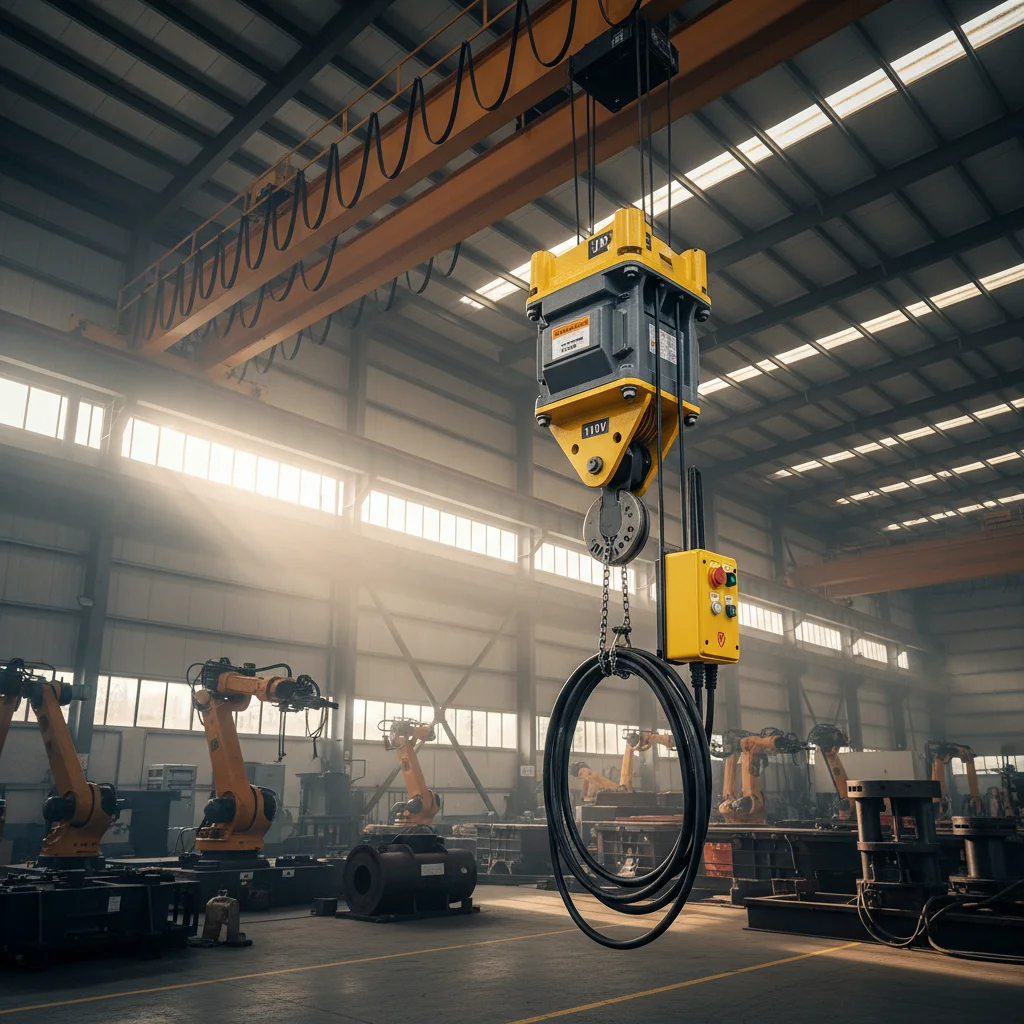
In the demanding world of industrial material handling, the efficiency of lifting operations can determine the overall productivity of a facility. The CD1 electric wire rope hoist stands as a pivotal solution for businesses requiring a blend of power, reliability, and ease of installation, offering a streamlined approach to vertical transportation of heavy loads across various sectors.
From small-scale workshops to large industrial complexes, the need for precise and safe lifting mechanisms is universal. The implementation of a high-quality wire rope system reduces manual labor, minimizes the risk of workplace injuries, and ensures that heavy components are moved with surgical precision, which is essential for maintaining tight production schedules.
Whether you are upgrading an existing warehouse or designing a new production line, selecting the right CD1 electric wire rope hoist is critical for operational success. By understanding the technical nuances and application-specific advantages of these machines, operators can maximize their uptime and ensure a safer working environment for all personnel.
Global Industry Context of CD1 Hoists
The global logistics and manufacturing landscape has seen an unprecedented surge in demand for automated and semi-automated lifting solutions. As international trade grows and ISO standards for workplace safety become more stringent, the industry has shifted toward equipment that offers higher load capacities with reduced operational risk, making the CD1 electric wire rope hoist a staple in modern infrastructure.
In regions like Southeast Asia and Europe, the rapid expansion of petrochemical plants and port facilities has highlighted the critical need for durable lifting machinery. The challenge often lies in balancing high-frequency usage with the need for low maintenance, a gap that is effectively filled by engineered wire rope systems designed for heavy-duty cycles.
Defining the CD1 Electric Wire Rope Hoist
At its core, a CD1 electric wire rope hoist is a motorized lifting device that utilizes a high-strength steel wire rope to raise and lower loads vertically. Unlike chain hoists, the wire rope design is often preferred for specific speed requirements and load capacities, providing a smooth transition during the lifting process that is essential for fragile or extremely heavy industrial components.
Modern versions of these hoists are integrated into the broader ecosystem of material handling, often working in tandem with trolleys and overhead cranes. This connectivity allows for three-dimensional movement within a workspace, transforming a simple lifting tool into a comprehensive material transport system that supports the needs of diverse industrial applications.
Beyond mere utility, these machines address a fundamental humanitarian and safety need: the removal of extreme physical strain from the human worker. By automating the most strenuous parts of the lifting process, the CD1 system ensures that productivity is not limited by human physical capacity, while simultaneously reducing the incidence of workplace injuries.
Core Components and Technical Factors
The durability of a CD1 electric wire rope hoist depends heavily on the quality of its motor and braking system. A high-torque motor ensures that loads are lifted steadily without stuttering, while a fail-safe braking mechanism prevents the load from slipping in the event of a power failure, adhering to the highest safety standards.
Another critical factor is the rope diameter and material. For instance, a CD1 electric wire rope hoist with a 16800lb capacity utilizes a 10.5mm rope to ensure a high safety factor. The precision winding of the rope onto the drum prevents overlapping, which is the leading cause of rope wear and premature failure in lower-quality machines.
Cost efficiency is achieved through the balance of material selection and engineering. By using high-grade alloys in the gearing system and optimized DC voltage options (12v or 24v), these hoists provide long-term value by reducing electricity consumption and extending the intervals between required professional servicing.
Global Applications and Use Cases
In real-world contexts, the CD1 electric wire rope hoist is indispensable in road and bridge construction, where heavy steel beams and prefabricated concrete sections must be positioned with extreme accuracy. In these environments, the ability to handle loads up to 16800lb allows for the rapid assembly of critical infrastructure, significantly shortening project timelines.
Beyond construction, these units are widely deployed in petrochemical ships and port facilities across the globe. In these corrosive environments, the robust build and specialized coatings of the hoist ensure that operations continue uninterrupted despite exposure to salt air and humidity, proving the equipment's reliability in extreme conditions.
Performance Analysis of CD1 Hoist Configurations

Tangible Advantages and Long-Term Value
The primary advantage of investing in a professional-grade CD1 electric wire rope hoist is the drastic increase in operational safety. By utilizing CE and GS certified equipment, companies can ensure that their lifting processes meet international safety benchmarks, reducing insurance liabilities and protecting the most valuable asset of any company: its workers.
From a logical and financial perspective, the long-term value is found in the reduction of downtime. High-performance motors that undergo three-stage testing before delivery ensure that the equipment does not fail during critical operations, providing a level of trust and reliability that cheaper, non-certified alternatives simply cannot match.
Future Trends in Lifting Technology
The future of lifting equipment is trending toward the integration of smart sensors and IoT connectivity. We expect to see CD1 electric wire rope hoist systems equipped with real-time load monitoring and predictive maintenance alerts, allowing operators to identify rope wear or motor fatigue before a failure occurs, moving from reactive to proactive maintenance.
Sustainability is also playing a larger role, with a shift toward higher-efficiency motors that reduce energy consumption during peak lifting cycles. The adoption of eco-friendly lubricants and recyclable alloy components is becoming a priority for manufacturers looking to reduce the environmental footprint of heavy industrial machinery.
Furthermore, the move toward automation and remote operation is accelerating. The ability to control a hoist via a digital interface from a safe distance not only increases safety in hazardous environments but also allows for more precise coordination in complex assembly tasks, marking a new era of digital transformation in material handling.
Overcoming Common Implementation Challenges
One of the most common challenges in deploying a CD1 electric wire rope hoist is the incorrect selection of capacity for the specific job. Overloading the equipment leads to premature rope failure, while under-utilizing a massive hoist leads to unnecessary energy costs and slower operation speeds. The solution lies in a thorough site audit and a precise load-calculation phase.
Environmental degradation, particularly in coastal or chemical-heavy zones, can lead to rapid corrosion of the wire rope. To overcome this, expert insights suggest the use of galvanized ropes and regular lubrication schedules, combined with protective housings that shield the motor and gear assembly from airborne contaminants.
Finally, the lack of operator training often results in inefficient use of the equipment. Implementing a standardized training program that focuses on "soft-starting" and "soft-stopping" loads can extend the lifespan of the hoist significantly, ensuring that the equipment operates within its designed parameters for years to come.
Technical Specification and Capacity Analysis of CD1 Hoists
| Model Capacity | Rope Diameter | Max Lift Height | Power Supply |
|---|
| 2000lb | 4mm | 6m | DC 12v/24v |
| 4000lb | 5mm | 10m | DC 12v/24v |
| 6000lb | 9mm | 14m | DC 12v/24v |
| 9500lb | 9mm | 24m | DC 12v/24v |
| 12000lb | 9mm | 24m | DC 12v/24v |
| 16800lb | 10.5mm | 24m | DC 12v/24v |
FAQS
The primary difference lies in the lifting medium. A CD1 electric wire rope hoist uses a steel cable, which typically allows for higher lifting speeds and is often preferred for higher load capacities over longer distances. Chain hoists use a link chain, which is generally more compact and better for precision positioning of lighter loads in tight spaces.
You should calculate the maximum weight of the load you intend to lift, including the weight of the lifting tackle (slings, hooks). To ensure safety and equipment longevity, it is recommended to choose a hoist with a capacity at least 20% higher than your maximum load to avoid operating at the absolute limit of the machine.
Yes, provided that the correct specifications are chosen. For coastal areas, it is essential to use galvanized wire ropes and ensure the unit is regularly lubricated to prevent salt-induced corrosion. Our products are designed for reliability in various fields, including petrochemical ships and ports, ensuring durability in harsh environments.
Regular maintenance includes inspecting the wire rope for frays or kinks, lubricating the gears and cable, and checking the brake functionality. We recommend a monthly inspection of the rope diameter and a quarterly check of the motor electrical connections to ensure stable operation and a long service life.
The DC options are specifically designed for versatility, making them ideal for mobile platforms, vehicles, or remote sites where traditional AC power is unavailable. For standard industrial grids, a compatible power converter or transformer is used to provide the required DC voltage to the hoist motor.
You should look for CE and GS certifications. These certifications ensure that the equipment has undergone rigorous testing for mechanical safety, electrical stability, and load-bearing reliability, meeting the stringent safety standards required for international industrial use.
Conclusion
The CD1 electric wire rope hoist represents a vital intersection of mechanical power and operational safety, providing an efficient solution for the most demanding lifting tasks. By integrating high-strength materials, rigorous three-stage testing, and versatile power options, these hoists enable industries to scale their operations while maintaining a steadfast commitment to worker safety and equipment reliability.
As the industry moves toward a more automated and sustainable future, the importance of selecting a certified, high-performance lifting partner becomes even more apparent. Investing in quality machinery today not only secures your current production line but also lays the groundwork for future technological upgrades. To explore our full range of lifting solutions and find the perfect match for your needs, visit our website: www.juyinghoist.com.