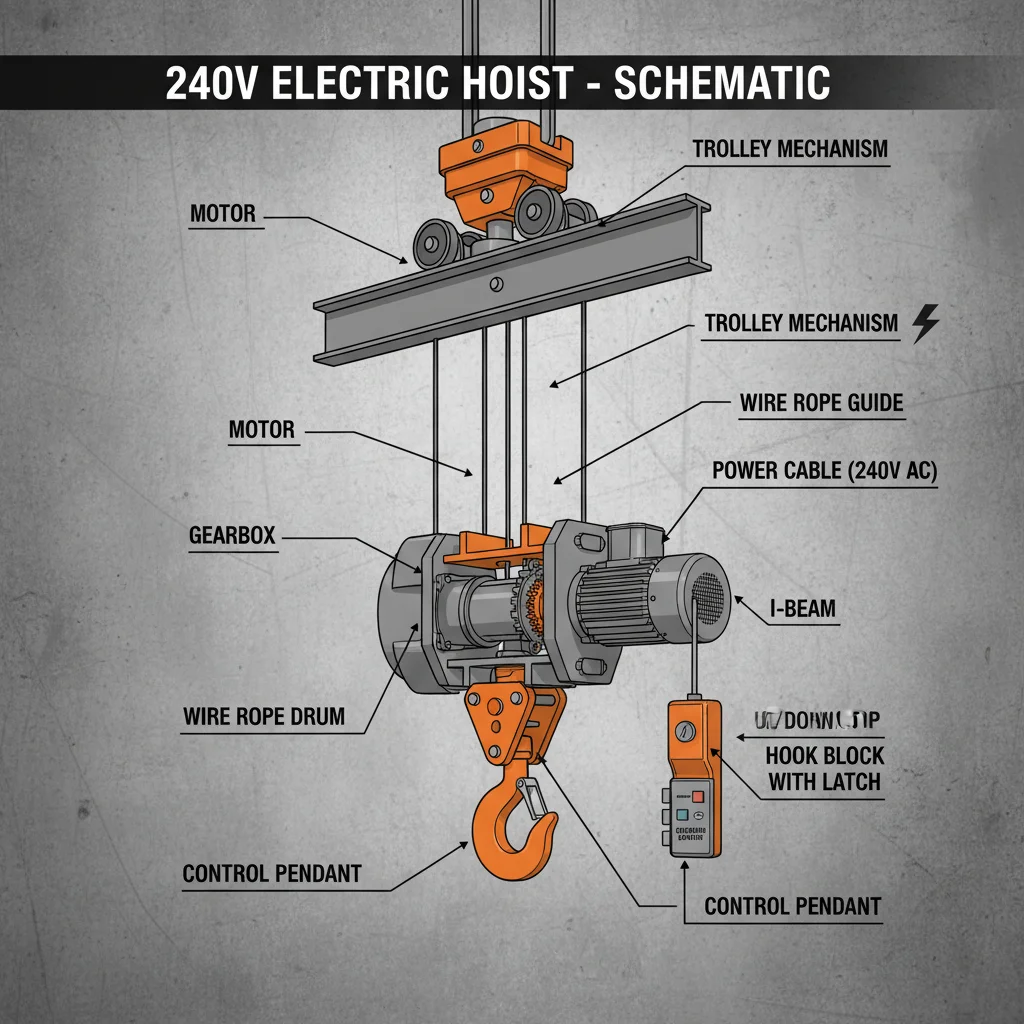
The global demand for efficient material handling solutions has surged as infrastructure projects and industrial automation expand across diverse terrains. Among the most versatile tools in this sector, the concept of the 110v electric winch represents a critical intersection of accessibility and power, allowing operators to move heavy loads with precision in environments where standard industrial power grids may be limited. Understanding the nuances of these lifting systems is essential for ensuring both operational efficiency and workplace safety.
From a global perspective, the adoption of standardized electrical components has streamlined the deployment of lifting machinery in construction and logistics. The integration of 110v power systems ensures that equipment can be utilized in a wider array of regional settings, particularly in North American and specific Southeast Asian markets. This flexibility reduces the need for expensive power converters and allows for faster deployment of essential lifting infrastructure in time-sensitive projects.
However, the primary challenge remains balancing the lifting capacity with the electrical constraints of the power source. For those seeking high-performance options, choosing a 110v electric winch requires a deep understanding of the relationship between motor torque, voltage stability, and load requirements. By optimizing these factors, industries can achieve a seamless workflow that minimizes downtime and maximizes throughput.
Understanding the Fundamentals of 110v Electric Winches
An electric winch is a mechanical device used to pull or lift heavy objects by winding a rope or cable around a drum. When configured as a 110v electric winch, the device is specifically designed to operate on a single-phase alternating current (AC) power supply common in residential and light commercial settings. This makes it an ideal choice for small-scale workshops, automotive garages, and remote construction sites where 220v or 3-phase power is unavailable.
The versatility of these machines lies in their ability to provide consistent pulling force without the physical exertion required by manual hand winches. By utilizing a high-torque electric motor, these systems can handle loads that would otherwise require multiple workers, thereby increasing productivity and reducing the risk of musculoskeletal injuries on the job site.
Engineering Standards for Electrical Lifting Equipment
Modern lifting equipment is governed by strict international standards to ensure operator safety and equipment longevity. For a 110v electric winch, adherence to CE and GS certifications is paramount, as these marks indicate that the product meets the essential health and safety requirements of the European Economic Area. This involves rigorous testing of the electrical insulation, braking systems, and the structural integrity of the chassis.
Engineering these devices requires a precise balance of gear ratios. Because 110v systems generally provide less raw wattage than high-voltage industrial systems, engineers utilize planetary gear sets or worm gears to multiply torque. This allows the winch to lift significant weights—such as those seen in the EB series range—while maintaining a manageable electrical draw that does not trip standard circuit breakers.
Furthermore, the integration of thermal overload protection is a critical engineering standard. Since electric motors can overheat when lifting loads near their maximum capacity for extended periods, an automatic shut-off mechanism prevents the motor windings from burning out. This ensures that the equipment remains reliable over thousands of cycles, providing a sustainable return on investment for the user.
Core Components and Durability Factors
The durability of a 110v electric winch is primarily determined by the quality of its materials. The housing must be constructed from heavy-duty steel or reinforced aluminum to resist deformation under high tension. Additionally, the drum must be precision-machined to ensure that the cable winds evenly, preventing "bunching" which can lead to premature wear or sudden cable failure.
Central to the operation of any 110v electric winch is the motor and braking system. High-grade copper windings are preferred for their superior conductivity and heat dissipation. Simultaneously, an electromagnetic brake is typically employed to ensure that the load is held securely in place the moment power is cut, preventing dangerous free-falls.
Finally, the cable material—whether galvanized steel wire rope or high-tensile synthetic webbing—plays a huge role in overall lifespan. Regular lubrication and inspection for frays or kinks are essential maintenance steps. When these components are synchronized with a stable power source, the equipment can withstand harsh industrial environments, including petrochemical sites and port facilities.
Comparative Performance Analysis of Winch Types
When comparing different lifting solutions, the 110v electric winch stands out for its balance of portability and power. Unlike manual chain blocks that require significant physical effort or heavy-duty industrial hoists that require specialized electrical installations, these winches offer a "plug-and-play" experience for a wide range of light-to-medium lifting tasks.
To better understand the positioning of these tools, it is helpful to look at performance ratings across different categories. While a manual winch offers maximum portability, it lacks speed. Conversely, a high-voltage hoist offers maximum power but lacks versatility in location. The electric winch fills the critical gap in between, providing motorized efficiency in common power environments.
Operational Efficiency Rating of 110v Electric Winch Variants
Global Applications in Modern Industry
The application of the 110v electric winch extends far beyond the simple garage. In the automotive industry, these tools are indispensable for engine removal and chassis lifting, where precision is more important than raw speed. In the realm of road and bridge construction, they are often used for positioning smaller structural components or hauling equipment across uneven terrain where larger cranes cannot reach.
Furthermore, in disaster relief operations and remote industrial zones, the ability to operate on 110v power—often provided by portable generators—makes these winches vital. They are used to clear debris, lift emergency supplies, and stabilize temporary structures. This adaptability ensures that critical infrastructure can be restored quickly, regardless of the local power grid's condition.
Safety Protocols and Long-Term Reliability
Safety is the non-negotiable priority when operating any lifting machinery. For users of a 110v electric winch, the first rule is to never exceed the rated direct lifting force. Overloading the system not only risks cable snapping but can lead to motor failure or the collapse of the mounting structure. Regular inspections of the wire rope for signs of wear or corrosion are mandatory to prevent catastrophic failures.
Another critical safety aspect is the use of a proper grounding system. Because these winches operate on AC power, ensuring the device is correctly grounded prevents electrical shocks to the operator. Additionally, utilizing a remote control pendant allows the operator to maintain a safe distance from the load, reducing the risk of injury in the event of a load shift or equipment failure.
To ensure long-term reliability, a scheduled maintenance program should be implemented. This includes lubricating the gears, checking the tension of the braking system, and verifying the integrity of the electrical connections. By investing in professional-grade equipment and following strict safety protocols, companies can ensure a safe working environment while maximizing the lifespan of their machinery.
Technical Specifications and Selection Guide
Selecting the right lifting equipment requires a careful analysis of the specific task at hand. When choosing a 110v electric winch, one must consider the "Direct Lifting Force" versus the "Tie-Up Tension." Direct lifting usually refers to vertical hoisting, while tie-up tension refers to horizontal pulling. As seen in the EB series specifications, the tie-up tension is significantly higher than the lifting force due to the reduced friction and different mechanical advantages involved in pulling.
Additionally, the cable length is a deciding factor. Depending on the application—whether it is lifting a load from a basement or pulling a vehicle from a ditch—the maximum length of the rope must be sufficient to cover the distance without requiring excessive layering on the drum, which could lead to uneven wear.
For those requiring customized solutions, OEM and ODM services allow businesses to tailor the voltage, capacity, and branding of their equipment. This is particularly useful for companies building their own brand of lifting tools or those with very specific site requirements that standard off-the-shelf models cannot meet.
Technical Capacity Analysis of EB Series 110v Electric Winch Models
FAQS
Yes, 110v electric winches are ideally suited for use with portable generators. However, it is crucial to ensure that the generator can handle the "starting current" or surge power of the winch motor, which is typically higher than the running current. Using a generator with a stable voltage regulator is recommended to protect the motor from power spikes.
Lifting force refers to the maximum weight the winch can lift vertically against gravity. Tie-up tension refers to the maximum force the winch can exert when pulling a load horizontally. Because pulling a load horizontally often involves less friction (especially with rollers) and different mechanical stresses, the tie-up tension capacity is often different from the vertical lift capacity.
For industrial use, a visual inspection should be performed before every single lift. A more comprehensive inspection, including checking for internal wire breaks, corrosion, and lubrication levels, should be conducted monthly. If any fraying or "bird-caging" is detected in the wire rope, it must be replaced immediately to prevent accidents.
A 110v system is excellent for light to medium duties. For extremely heavy industrial lifting (e.g., multi-ton structural steel), 3-phase power systems are generally preferred because they provide higher efficiency and more consistent torque. However, for many workshop and field applications, a high-capacity 110v electric winch is more than sufficient.
Professional-grade winches, such as those from Hebei Juying, feature automatic electromagnetic brakes. These brakes engage automatically the moment the power is switched off or in the event of a power failure, ensuring that the load remains suspended safely and does not slide back down.
Yes, through OEM and ODM services, manufacturers can customize the electrical specifications, lifting capacities, and branding to meet your specific needs. Whether you need a different voltage for a specific region or a custom cable length for a unique application, professional manufacturers can provide tailored solutions.
Conclusion
The 110v electric winch serves as a cornerstone of modern material handling, bridging the gap between manual labor and heavy industrial machinery. By combining accessibility through standard voltage with robust engineering and rigorous safety certifications, these devices empower businesses to handle challenging lifting tasks with efficiency and confidence. From the high-capacity EB series to portable workshop solutions, the key to success lies in matching the equipment's technical specifications to the actual load requirements while maintaining a strict safety regimen.
As industry trends shift toward more portable and modular infrastructure, the importance of versatile lifting equipment will only grow. Investing in high-quality, certified machinery not only ensures the safety of the workforce but also optimizes operational costs and increases long-term productivity. We encourage you to evaluate your lifting needs and choose solutions that prioritize durability and safety. Visit our website for more professional lifting solutions: www.juyinghoist.com